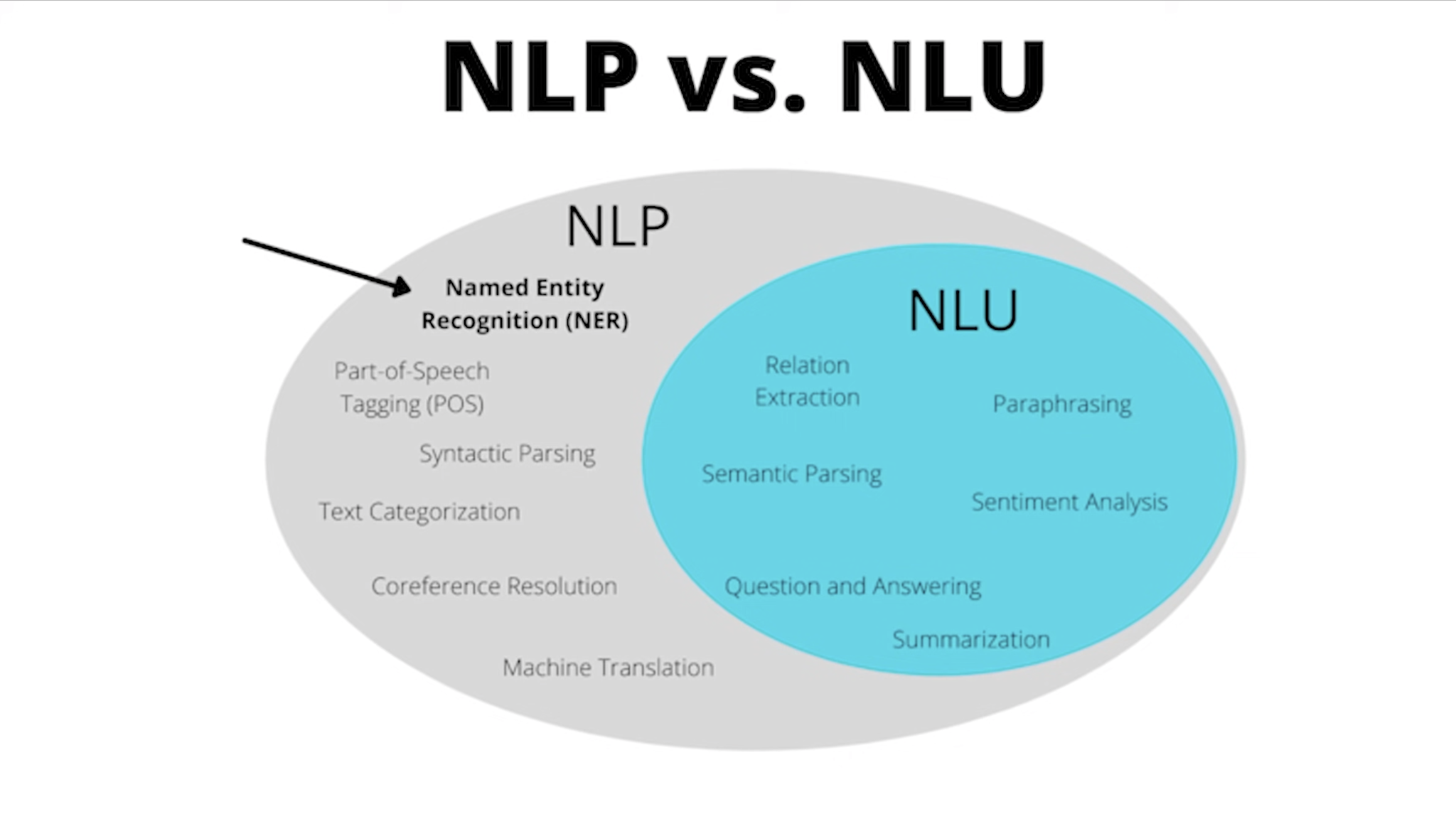
Natural language processing (NLP) covers the techniques that let software read, classify, transform and generate human language. Natural language understanding (NLU) is the subset concerned with meaning: intent, entities and relations. This section collects pages on the core NLP tasks; the taxonomy diagram further down places them within the wider AI and machine learning landscape.
1. How the NLP tasks fit together
Almost every pipeline starts by turning input into tokens: audio is first transcribed by a speech recognition model, and text is split into words or subword units that a model can embed. From there, tasks branch. Classification and NER extract structured signals (a label per document, spans per entity) that feed dashboards, routing rules and search filters. Summarization and translation are generation tasks that produce new text. Modern transformer models can perform all of these, but smaller task-specific models remain cheaper and more predictable at high volume.
2. Choosing an approach
The table below summarises what each task produces and the usual tooling, from lightweight libraries to large language models.
Task
Output
Typical tools
Use when
Tokenization
Tokens, ids
spaCy, Hugging Face tokenizers, tiktoken
Always; it precedes every model
Text classification
Label(s) per document
scikit-learn, fine-tuned BERT, LLM zero-shot
Routing, moderation, sentiment
NER
Entity spans and types
spaCy, Presidio, fine-tuned transformers
Extracting people, orgs, PII
Summarization
Shorter text
BART, T5, LLMs
Long documents, meeting notes
Machine translation
Text in another language
MarianMT, NLLB, cloud APIs, LLMs
Multilingual content
Speech
Transcript or audio
Whisper, cloud ASR/TTS
Calls, voice interfaces
A practical rule: use a small supervised model when you have labelled data and need low latency and stable outputs, and an LLM when labels are scarce, the task changes often, or the output is free-form text.